

Blog
Get Pay Right on ADP Workforce Now® Next Gen™
Bringing trusted compensation intelligence and seamless planning to even more ADP users.
Written by Salary.com Staff
April 10, 2026

In a competitive business, it's important for HR leaders to understand how their teams contribute to the bottom line. Revenue per employee is a straightforward measure of workforce productivity, helping organizations make decisions regarding talent and other assets. Such a measurement connects people's plans directly to financial outcomes, making it an essential performance indicator for growth.
Revenue per employee or revenue per FTE is simply the total revenue (i.e. money received for goods or services rendered) divided by the number of employees (full time equivalents). Human resources professionals can better determine how effective a workforce is at leveraging effort into profit with this measurement.
Essentially, if revenue per FTE is high, companies are either operating at a very lean workforce or are either able to hire/train certain capacities to ensure that such a number is possible. If the number is low, it indicates that either there is too much human capital in relationship to output or a need for strategic reassessment in training.
Reporting & Analytics offers built-in reporting and analytics to evaluate market positioning, pay competitiveness, and internal pay alignment. It supports the creation of standardized and custom compensation reports and delivers advanced compensation analytics to support pay decisions, internal equity reviews, and market comparisons.
The reason that revenue per FTE stands out as a workforce efficiency measurement is because it captures value directly from human output to business outcome.
It's a proxy for productivity; where one is lacking per person, it shows what's working--processes, skills, etc. For HR professionals, this can show where investments in talent from tools to training programs might really add value.
In addition, it points out inefficiencies. If the number declines, there are too many employees for little work or outmoded processes that need a strategic overhaul or retraining.
Keeping the number high suggests a lean workforce punching above its weight, keeping the company--and profitability--healthier and under better operating costs.
According to McKinsey, S&P 500 companies that get the most out of return on talent earn 300 percent more revenue per FTE than average, which helps to track high performance teams.
In workforce planning, revenue per FTE helps inform decisions on how a staff is built. It helps project needs based on anticipated revenue growth, which can balance hiring plans with budgets.
A revenue per FTE measurement allows HR leaders to assess anticipated total revenue on a per person basis. If there are many potential hires needed, HR leaders must ensure that businesses can afford to continue bringing people without oversaturating the workforce.
It also indicates whether companies are set up in the immediate for long-term success. If revenue per FTE continues to grow, the current situation is working.
If it stagnates, there are strategic adjustments and more intensive reskilling efforts that must take place to avoid undermining stability.
Revenue per FTE is frequently used to guide workforce planning decisions. Forecasting labor costs based on headcount and pay changes directly support hiring, expansion, and productivity planning tied to this metric.
Trends help determine whether expansion makes sense. When revenue per FTE goes up, it suggests that planning works, whether from successful hiring or intuitive investments in technology which helps streamline processes.
Alternatively, if the number goes down, it suggests that teams need review, overstaffed redundancies need to be assessed and retraining must take place.
Tracking revenue per FTE over quarters helps HR professionals determine when people are hired if there's been adequate growth in revenue or if companies have scaled too fast which jeopardizes potential.
Organizations benchmark revenue per FTE against industry averages. They pull from reports or databases for an average across the field to make sense of where their numbers fit. Benchmarking involves comparing apples to apples through like industries and similar values (size, location, etc).
Companies need to access certain resources for reliable averages, like financial assessments or professional surveys. Knowing company averages against industry ones helps organizations determine if they need to play catch up for investment or if they are doing well enough to maintain current practices.
Benchmarking revenue per FTE requires understanding how compensation compares to the market. Competitive Compensation supports evaluating whether pay levels for key roles align with competitive positioning that can influence productivity outcomes.
| Industry | Average Revenue Per FTE (USD) |
|---|---|
| Energy | 1,790,000 |
| Healthcare | 800,000+ |
| Technology | 400,000 |
| Retail | Under 100,000 |
This table illustrates the discrepancies from a sample industry to industry, which makes it important for HR professionals to take the time to contextualize their own situations against larger trends.
Benchmarking reveals strengths and weaknesses and essentially how aligned a company operates within its industry.
A good revenue per FTE percentage can indicate great teams working together or strong selling features/attractive goods/services.
A bad average can indicate redundancies via overhiring or lackluster skill sets that weren't properly vetted during the hiring processes.
Benchmarking also indicates where competition reigns. If companies invest more in technology that facilitates opportunities for automation to generate better numbers, HR leaders must know this and determine how well their people plans fit into existing talent acquisition and development.
According to Great Place to Work's study of the 100 best companies to work for, they realized that these companies earn 8.5 times more revenue per FTE than the market average, which links the findings to strong culture.
Calculating revenue per FTE is straightforward once you have the right data.
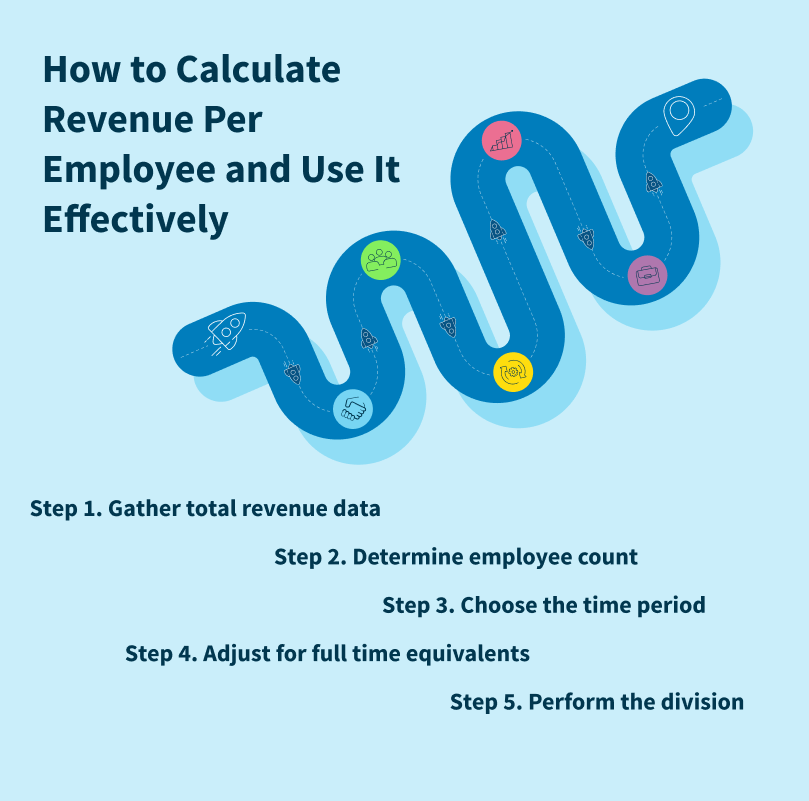
Professionals should gather total revenues from each company's income statement; this includes all income—sales and services. Exclude windfalls or one-time gains or money made from selling assets—those are not repeatable revenues. Focus on the most recent 12 months since this type of assessment seeks relevancy.
If this step falls short of accuracy, subsequent calculations will be skewed.
Determine how many full time equivalents have been working for the past 12 months. This means that professionals should add their part time equivalents together—for instance, two half time workers equals one full time—and use an average if employee numbers changed during the time of calculation.
This allows for the most fair assessment for average numbers.
The time period should be either fiscal year or quarter—for consistency purposes—and should match up with the determined revenue data.
This allows for valid comparisons across data points.
Professionals should ensure they've adjusted for full time equivalents to represent the most accurate assessment possible.
Professionals need to take total revenues and divide it by total FTEs to get revenue per FTE in dollar per person format.
Here is the formula:
Revenue Per FTE = Total Annual Revenue / Total Number of FTEs
This will ensure all assessments reveal the dollar amount achieved per person working.
Revenue per FTE in HR strategy should serve as value for budget justification by determining all people-oriented developments that could reap the most benefits for plans in talent acquisition and development.
Measuring HR impact against such a formalized value helps keep HR professionals accountable for programs through inclusions in future budgets for training programs that helped or technology that helped.
When compensation aligns with performance, revenue per FTE will go up because bonuses can be tied directly to income-driving forces--number of sales tickets closed or percentage of sales margin on certain goods.
This creates accountability along with well-designed programs that create engagement opportunities for better numbers.
Additional recommendations include the following:
Reward top performers with variable pay.
Use data-based benchmarks for fairness.
Yearly reviews ensure relevance.
Here are the common questions about the topic:
Incentive plans can impact motivation because they attempt to bridge gaps wherever interest lies by rewarding excessive effort; when performance is lacking, it's suggested that incentive plans offer opportunities for added effort that could lead to improved numbers.
Yes, if revenue per FTE goes up after planned raises, those reasonable expenditures are proven worthwhile.
FTE adjustments change revenue per FTE calculations because if companies do not account for part time work, the numbers skew substantially; it's especially important for HR professionals since part time roles operate within their parameters.
Acceptable revenue per FTE averages is based on industry standards which help define how well one company operates against others. Professionals should assess their company's industry report averages to best fit their needs as well.

The latest research, expert advice, and compensation best practices all in one place.
Blog
Bringing trusted compensation intelligence and seamless planning to even more ADP users.

Blog
Learn how to train managers for effective pay conversations and build trust.

Blog
Total rewards package flexibility lets employees choose what matters - pay, perks, and benefits tailored to their needs.