

Pay Equity

Communicating pay equity

Establish a consistent message about pay and affirm that your organization believes in fair and equitable pay for all.

Total compensation statements

Complete compensation picture: Within CompAnalyst® you can run a Total Compensation Statement which provides a consolidated view of an employee’s compensation – from base pay and bonuses to benefit information like medical insurance, 401k, taxes, etc. – and deliver on your commitment to pay transparency.
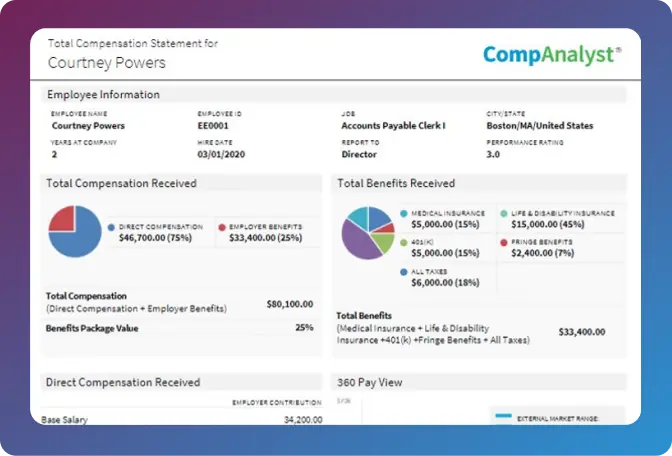
Total compensation statements

Employee career progression

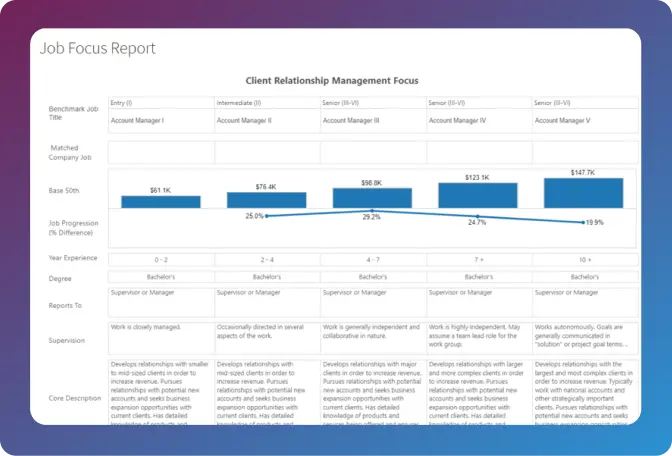
Job focus report®: This compensation report describes the job levels in a job family and provides a foundation for leadership to discuss career progression with an employee.

Employee understanding: This information helps an employee understand how they fit into your internal structure, where they sit among their peers, and opportunities for growth in the organization.

Employee career progression

Pay Equity audit certification

Open communication: Make it clear that your organization encourages employees to discuss their pay, performance, and opportunities for career advancement periodically with their manager.

Official certification: Engaging with Salary.com in a Pay Equity audit provides you with a Pay Equity certification that documents your commitment to pay equity and your good faith participation in the audit. Certification demonstrates that your organization has completed a comprehensive pay equity audit and is committed to being a fair payer.

Pay Equity audit certification

Schedule your personalized demo

Are you ready to get pay right?

Discover the full potential of our solution. Book a demo call today to explore its wide-ranging capabilities, including:

  • How to create salary structures
  • How to conduct pay equity audits
  • How to design incentive programs
  • How to price jobs using our market data
  • How to simplify compensation management

… and much more!

All fields are required
Please enter a valid work email

By submitting, you consent to receiving communications from Salary.com. See our Privacy Policy and Terms of Use. Unsubscribe anytime.

Frequently Asked Questions

How we define pay equity has evolved over recent years. Pay equity today ensures equal compensation for comparable roles, emphasizing internal fairness, external competitiveness, and clear, transparent communication. From the employee perspective, we’re seeing them view pay equity through a broader lens. Yes, employees want to know that they are being paid fairly, but now they also want assurances that everyone else in their company is paid fairly, too.

Pay equity processes ensure employees are compensated fairly based on the value of their work, regardless of factors like gender, race, or other personal characteristics. This involves assessing roles for comparable responsibilities, skills, and qualifications, conducting regular pay audits to identify disparities, and aligning compensation with job market standards. Transparent pay communication and consistent reviews help maintain fairness and compliance with pay equity laws.

To conduct a pay equity analysis, start by defining the scope, collecting employee data (job titles, pay rates, and demographics), and grouping comparable roles. Analyze pay gaps using statistical methods, investigate causes, and address unjustified disparities through adjustments and policy changes. Learn how you can easily and effectively do this with CompAnalyst Pay Equity Suite.

Paying equitably and fairly offers both ethical and business advantages. Fairly compensated employees tend to be more productive and innovative, while employers who prioritize pay equity foster an environment that attracts and retains top talent. In recent years pay equity and pay transparency have become the law.

A pay equity audit should include employee data, job classifications, current compensation policies, a detailed analysis of pay gaps, a root cause analysis, an action plan for improvement, and a compliance review to ensure adherence to legal standards.

On average, in the U.S., women make 83 cents for every dollar men earn. The gender wealth gap is even worse, as women have only 32% of the wealth men have accumulated.

It’s easy to get started

Transform compensation at your organization and get pay right — see how with a personalized demo.