

Blog
Get Pay Right on ADP Workforce Now® Next Gen™
Bringing trusted compensation intelligence and seamless planning to even more ADP users.
Written by Salary.com Staff
January 03, 2025

Creating an employee wellbeing strategy helps prevent physical, mental, and emotional challenges from impacting productivity and morale. If you're responsible for employee wellbeing or want to improve it in your organization, it's important to first know what it is and how to address it.
This article explains what employee wellbeing is, how to address it in the workplace, and provides examples of initiatives that promote employee wellbeing.
Employee wellbeing refers to the overall mental, physical, and emotional health of employees. This is supported through organizational practices and policies. To address employee wellbeing in the workplace, organizations need to understand the key factors affecting employees. Some of these factors include:
Excessive workload and high stress
Poor work-life balance
Lack of job security and financial stability
Toxic social environment
Neglect of physical health
Ineffective leadership and poor management
Unhealthy company culture
Having a winning total rewards strategy can be the key to improving staff wellbeing in the workplace. It ensures fair pay, benefits, work-life balance, employee recognition, and growth opportunities. This can lead to higher employee satisfaction and employee retention.
Employee wellbeing is important because it affects more than just employee happiness; it can greatly impact a business as well. Here are five reasons why investing in staff well-being benefits both employees and the organization:
Increases productivity and performance
A satisfied employee is more productive and performs better. A study showed that happy employees can be up to 20% more productive than those who are unhappy. When employees feel valued, they are motivated to do their best.
Reduces absenteeism and turnover
Companies with best work-life balance practices have lower absenteeism and turnover rates. Employees who feel their wellbeing is prioritized are 10% more likely to stay with their current employer, reducing the cost of employee turnover and training.
Improves employee engagement and morale
Employee financial wellbeing in the workplace is a key factor in overall job satisfaction. A study found that 78% of employees who are satisfied with their finances are also more engaged at work.
Builds a positive employer brand
A strong employee well being program can build a positive brand, which eventually draws top talent and boosts reputation. More than 60% of job seekers prioritize staff well-being support when considering potential employers.
Reduces healthcare costs
Wellness in companies improves employee health and lowers healthcare costs. Organizations that encourage healthy lifestyles can reduce medical claims and insurance premiums.
Addressing staff well-being is crucial for creating a productive and positive workplace. Here are some ways you can promote and improve employee wellbeing:
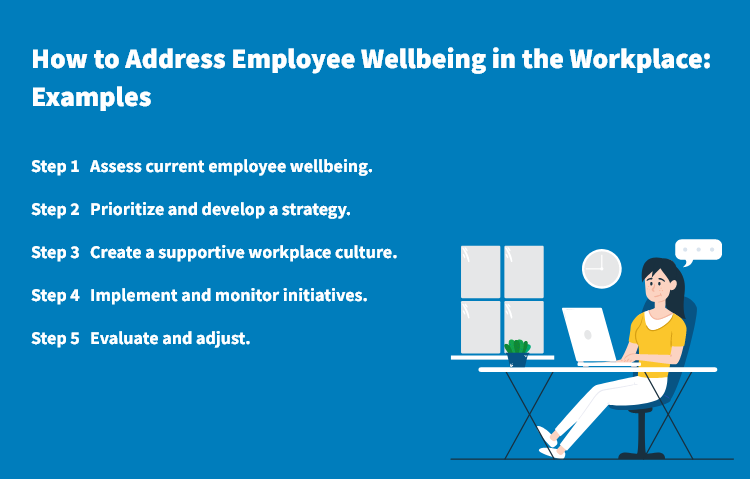
To address staff well-being, assess the current situation by gathering feedback through surveys, interviews, or focus groups. Focus on stress, work-life balance, job satisfaction, and overall health to identify areas for improvement.
HR analytics and benchmarking experts can analyze key areas in your organization like vacancies, time to fill positions, productivity, offer acceptance rates, and turnover. High turnover, for example, may indicate staff wellbeing issues.
After assessing wellbeing, prioritize key challenges like burnout or poor work-life balance. Create an employee wellbeing strategy with short- and long-term goals, along with the necessary resources. Make sure the strategy aligns with the company’s values and goals.
If financial wellness is the issue, offer competitive compensation to your employees. Conduct a pay assessment to ensure competitiveness and design a compensation program to support your workforce.
A supportive workplace culture promotes staff well-being by making them feel valued and respected. This includes open communication, mental health support, flexible work options, and recognition. Focusing on staff well-being can reduce stress, improve satisfaction, and boost productivity and retention.
A supportive workplace culture values diversity, equity, and inclusion (DEI), ensuring all employees feel respected. Assessing your DEI initiatives and creating a framework helps make the workplace more inclusive and fairer.
Once the strategy is developed, implement wellbeing initiatives like wellness programs, flexible hours, mental health days, or fitness access. Monitor their success by tracking participation, engagement, and feedback to ensure they are effective and make adjustments if needed.
These wellness initiatives should be integrated into your benefits program. If you believe your current program requires evaluation, experts can help assess it and make it a competitive advantage.
Evaluate wellbeing programs regularly to keep them effective. Use surveys and feedback to measure their impact and make improvements as needed. This helps the programs stay relevant to employees' needs.
If you're unsure about which employee wellness initiatives to implement, the following examples can offer inspiration and help create a healthier, more positive work environment:
Physical wellbeing
Providing a gym at work to encourage exercise.
Offering free health screenings to monitor staff well-being.
Stocking offices with fruits and healthy foods.
Providing comfortable desks and chairs to prevent strain.
Encouraging walking or biking to work with rewards.
Mental health
Offering confidential support for personal issues.
Giving employees paid time off for mental health or mental health benefits.
Teaching stress management techniques and addressing mental health challenges.
Allowing employees to adjust their work schedules.
Teaching leaders how to support mental health at work.
Social wellbeing
Organizing fun activities to build team spirit.
Giving employees time off to help in their communities.
Celebrating employees’ hard work and achievements.
Promoting diversity and support for all employees.
Encouraging employees to guide and learn from each other.
Financial wellbeing
Offering support for saving for retirement.
Providing assistance for employees with student debt.
Offering financial help for unexpected expenses.
The future of work is employee well-being and addressing it cannot be done overnight; companies need to create a structured plan, invest in resources, and continuously evaluate the effectiveness of their initiatives.
Salary.com consultants can guide your organization in improving pay practices, promoting fairness, and integrating DEI initiatives and benefits programs that improve and support employee wellbeing.

The latest research, expert advice, and compensation best practices all in one place.
Blog
Bringing trusted compensation intelligence and seamless planning to even more ADP users.

Blog
Learn how to train managers for effective pay conversations and build trust.

Blog
Total rewards package flexibility lets employees choose what matters - pay, perks, and benefits tailored to their needs.